Why Invisalign Aligners Cost More in Complex Cases: Attachments, Refinements, and Digital Planning Explained

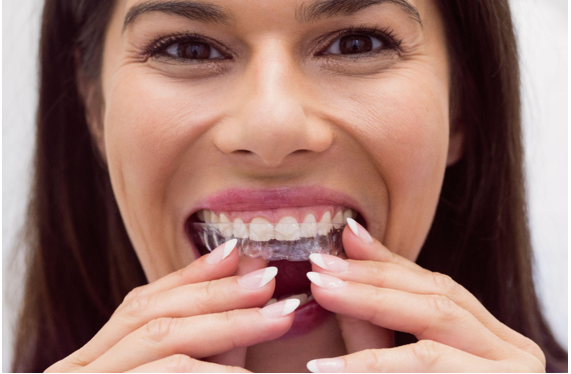
Many patients researching orthodontic treatment quickly notice that the cost of Invisalign aligners can vary from one case to another. While some treatments fall within a moderate range, others require more advanced planning and additional procedures. The difference often depends on how complex the tooth movements are and how many steps are needed to achieve stable results.
Understanding what influences the Invisalign aligners cost can help patients make sense of these variations. Orthodontic treatment with clear aligners involves more than simply wearing a series of trays. It includes digital planning, controlled tooth movement, and ongoing adjustments throughout treatment.
The Role of Case Complexity
Not every orthodontic case requires the same level of correction. Some patients may only need minor adjustments to address slight crowding or spacing. In these situations, treatment may involve fewer aligners and a shorter treatment timeline.
More complex cases often involve multiple types of tooth movement. Rotations, vertical changes, or bite corrections may require a larger number of aligners and careful planning. Because of this, the Invisalign aligner cost may increase when treatment involves greater complexity.
Orthodontists evaluate factors such as bite alignment, jaw relationships, and the position of individual teeth before creating a treatment plan. When several corrections must occur at once, the digital planning process becomes more detailed and the treatment sequence may require additional steps.
Attachments and Their Role in Tooth Movement
One factor that can influence the Invisalign aligners cost is the use of attachments. Attachments are small, tooth-colored shapes placed on certain teeth to help the aligners apply more precise force.
These attachments act as anchors that guide tooth movement. For example, rotating a tooth or shifting it vertically often requires more control than aligners alone can provide. In these cases, attachments allow the aligners to grip the tooth more effectively.
The placement of attachments requires careful planning during the digital design phase. Orthodontists determine where attachments should be positioned so that the aligners can move teeth gradually and predictably.
Because attachments add additional steps to treatment and require detailed digital planning, they can influence the overall Invisalign aligners cost in more involved cases.
Interproximal Reduction (IPR) and Space Management
Another procedure sometimes used during aligner treatment is interproximal reduction, often referred to as IPR. This technique involves removing a very small amount of enamel between certain teeth to create space for alignment.
When teeth are crowded, small adjustments to spacing can make it easier to guide teeth into proper positions. Orthodontists carefully measure how much space is needed and use specialized instruments to reshape the contact points between teeth.
IPR is typically minimal and controlled, but it requires careful assessment and monitoring during treatment. In cases where crowding is significant, this step may be necessary to allow aligners to function effectively.
Because procedures like IPR involve additional planning and clinical time, they may contribute to differences in the Invisalign aligners cost across treatment plans.
See also: Streamlining Healthcare Services for Better Patient Support
The Importance of Refinement Aligners
Even with detailed digital planning, teeth do not always move exactly as predicted. Each person’s biological response to orthodontic forces is slightly different. As a result, many orthodontic treatments include a refinement stage.
Refinement aligners are additional trays created after the initial series of aligners has been completed. These aligners address small adjustments that remain once the main movements are finished.
In some cases, only a few refinement aligners are needed. In others, a second sequence of aligners may be required to achieve the desired alignment.
Because refinement stages extend the treatment process and involve additional aligner production, they can influence the total Invisalign aligners cost, particularly in more complex cases.
Digital Treatment Planning and Simulation
Clear aligner therapy relies heavily on digital technology. Before treatment begins, orthodontists create a detailed virtual model of the patient’s teeth using intraoral scans.
Advanced software is then used to simulate each stage of tooth movement. The orthodontist reviews the digital plan, adjusts movement sequences, and determines how many aligners will be needed.
For straightforward cases, the simulation may involve a limited number of steps. Complex cases, however, may require more detailed adjustments to achieve precise movement and bite correction.
This level of digital planning requires time, expertise, and advanced software tools. The complexity of the planning process is another factor that can affect the cost of the Invisalign aligners.
Educational resources and orthodontic learning platforms, including materials discussed through Textbook Orthodontics, often highlight how digital workflows have become central to modern aligner therapy.
Monitoring and Adjustments During Treatment
Orthodontic treatment does not end once the aligners are delivered. Regular monitoring helps ensure that teeth are moving according to plan. Orthodontists review progress, evaluate tracking, and make adjustments when necessary.
If certain teeth do not move as expected, additional aligners or small changes to the treatment plan may be needed. These adjustments help guide the teeth back on track and maintain treatment progress.
Because complex cases often require closer monitoring and more adjustments, they can also contribute to variations in the Invisalign aligners cost.
Understanding the Bigger Picture
When patients compare treatment options, it can be tempting to focus only on the price of the aligners themselves. However, the cost reflects the entire treatment process rather than the aligners alone.
Orthodontic expertise, digital planning, clinical monitoring, and refinement stages all contribute to the overall treatment experience. In more involved cases, these elements require additional time and technical precision.
Understanding these factors helps explain why the Invisalign aligner cost may vary from one patient to another.
Final Thoughts
Clear aligner therapy combines digital technology with orthodontic expertise to guide teeth into improved alignment. While some cases require only minor adjustments, others involve complex tooth movements that demand detailed planning.
Procedures such as attachments, interproximal reduction, and refinement aligners all play a role in achieving accurate results. These factors, along with the complexity of digital treatment planning, influence the final Invisalign aligners cost.
For patients considering aligner therapy, discussing treatment details with an orthodontist can provide a clearer understanding of what their individual treatment plan may involve.